Eggs / Cook type guide
Fried eggs: six styles and what to look for
Sunny side up, over easy, over medium, over hard, crispy-edge and basted fried eggs explained for complete beginners.
How to use this guide as a complete beginner
Have the egg, pan, fat, spatula, plate and heat setting ready before you start. Eggs change quickly, so the calmer move is to prepare everything first and then cook.
Watch the white and the edge before worrying about the yolk. Clear egg white means not set yet. Opaque white means it is cooking through. Browning edges mean the pan is giving stronger heat.
Cook one egg at a time while learning. If it breaks, sticks or overcooks, it still teaches timing. Eggs are useful practice because the changes are visible and quick.
Go slowly enough to notice
Speed hides information. The first few attempts are for seeing the change, hearing the sound, naming the texture and learning what happens when you adjust.
Use the image as a checkpoint
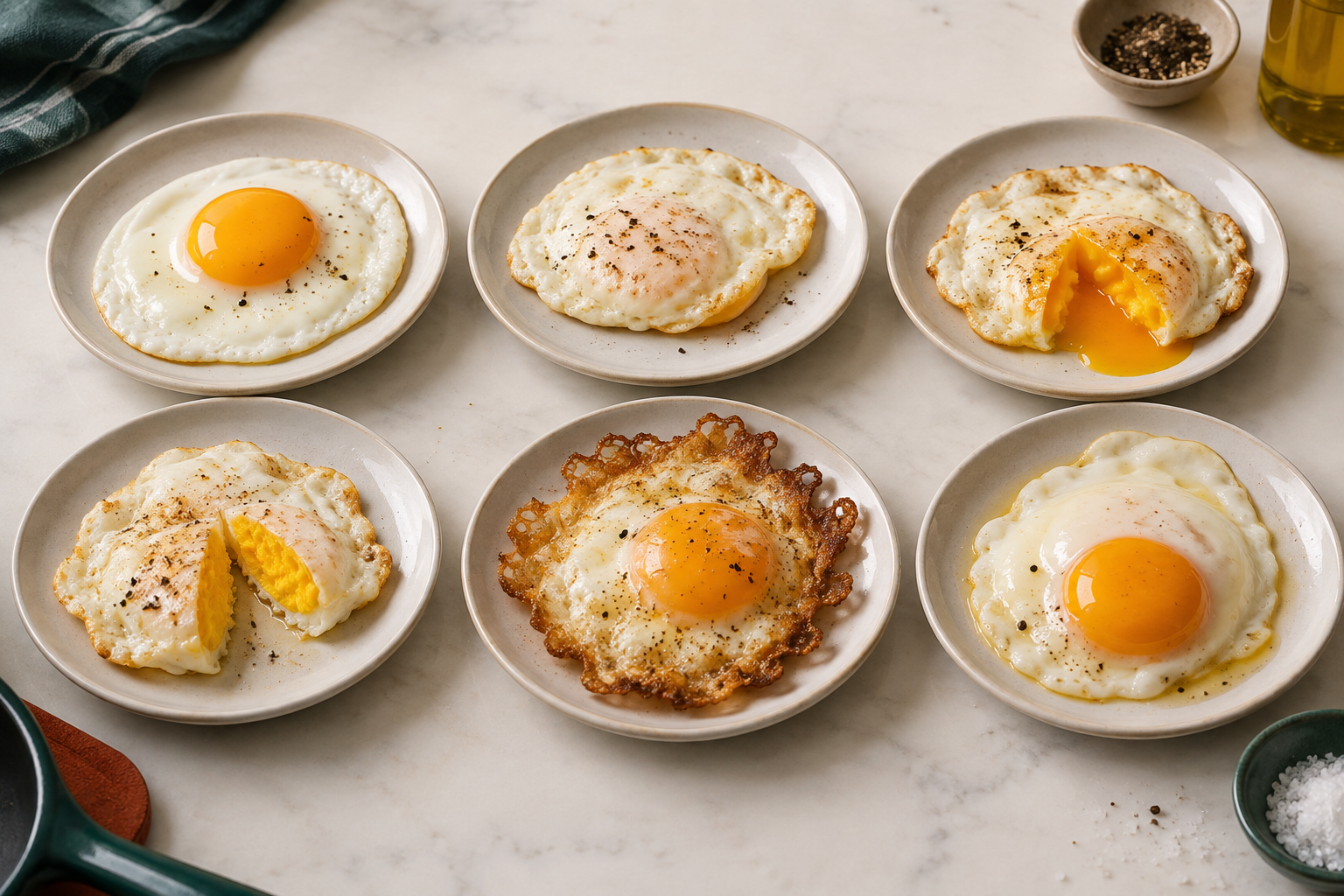
The linked KINALO image is not decoration. Compare it with your pan, board, bowl or tool so you know what stage you are looking for.
Good enough counts
Beginner cooking improves through repeatable attempts. If the food is usable and you learned the cue, the guide has done its job.
First-attempt checklist
Read the whole guide once before starting, then choose the smallest useful version of the task. Put the tools and ingredients where you can reach them. Decide what you will watch for first, such as colour, sound, texture, thickness, smell or how easily food moves.
During the attempt, change only one thing at a time. If the heat feels wrong, fix the heat before adding more ingredients. If the texture feels wrong, name the texture before trying to correct the flavour. This keeps the lesson clear.
Afterwards, write down one sentence: what worked, what changed too quickly, or what you would do earlier next time. That note matters more than a perfect result because it turns one cooking attempt into the next useful attempt.
If you only remember one thing, remember the cue rather than the instruction. Recipes tell you what to do; cooking confidence comes from recognising what is happening. Once you can name the cue, you can slow down, adjust and recover with less guesswork next time.
Why there are different fried egg styles
A fried egg is not one single result. The same egg can be cooked gently, flipped, crisped, basted or cooked through. The style changes the yolk, the white, the edge texture and how much heat control you need.
You do not need to master every style at once. Start with the one you actually want to eat, then use the others to understand timing.
The six styles
- Sunny side up: not flipped, set white, visible runny yolk.
- Over easy: flipped briefly, set white, runny yolk.
- Over medium: flipped longer, jammy yolk.
- Over hard: flipped until the yolk is fully set.
- Crispy-edge: hotter fat creates lacy browned edges while the centre stays tender.
- Basted: hot fat or steam is spooned over the top to help set the white without a full flip.
What beginners should watch
The white tells you most of what you need to know. Clear white is not set. Cloudy white is starting to cook. Opaque white is set. The yolk changes more slowly, so style choice is about when you stop or whether you flip.
Edges tell you about heat. Pale edges mean gentle heat. Golden edges mean browning. Dark hard edges mean the pan may be too hot or the egg has stayed too long.
How to avoid panic moments
- If the white is not setting but the edge is browning, lower the heat and cover briefly.
- If the yolk breaks, keep cooking and call it over hard, chopped egg or sandwich egg.
- If the egg sticks, pause, lower heat and slide a spatula under slowly rather than scraping hard.
- If the pan smokes, remove it from heat and reset.
Practice task
Cook two eggs on different heat levels. Make one gentle sunny side up and one crispier edge egg. Compare the sound, edge colour, white texture and how easy each is to lift.